

Which IP65 Validator with NFC Delivers Reliable Performance in Demanding Environments?
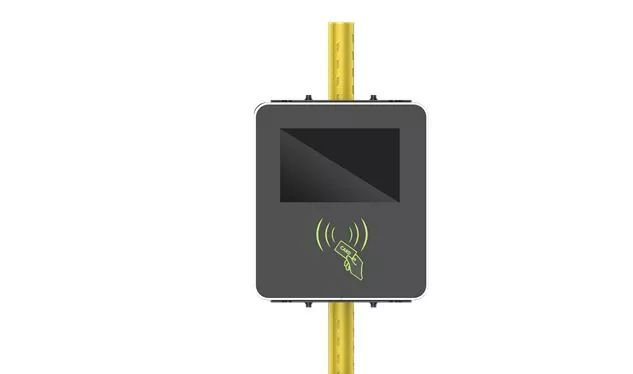
An IP65 Validator with NFC combines contactless identification technology with a protective enclosure designed to withstand dust and water jets. It offers an effective solution for businesses that need dependable user authentication, ticket validation, access management, or equipment identification in demanding environments.
However, choosing the right device involves more than checking its IP rating or confirming NFC functionality. Buyers must also consider communication protocols, reading performance, installation conditions, system compatibility, operating temperature, and long-term maintenance requirements.
This guide explains the essential features of an IP65 Validator with NFC, explores its industrial applications, and provides practical purchasing advice. With product development and customization considerations from CCETOUCH, it helps system integrators, equipment manufacturers, and project purchasers make more informed decisions.
1. What Makes an IP65 Validator with NFC Different?
Modern industrial and commercial systems increasingly depend on fast, accurate, and convenient identification. Traditional manual verification methods can slow down operations, increase labor requirements, and create unnecessary errors. Contactless validation provides an alternative by allowing users, products, or authorized personnel to interact with electronic systems through compatible cards, tags, or mobile devices.
An IP65 Validator with NFC brings two important technologies together: environmental protection and Near Field Communication.
The IP65-rated enclosure is designed to prevent dust ingress and resist water jets under specified test conditions. Meanwhile, the NFC interface enables short-range wireless communication between the validator and compatible contactless devices.
Two essential technologies:
- IP65 protection: Helps protect internal components against dust and water jets.
- NFC communication: Enables contactless data exchange with supported cards, tags, and mobile devices.
- Electronic validation: Processes identification information and communicates with connected systems.
- System integration: Can support access control, ticketing, identification, or other application-specific workflows.
Unlike a standard indoor reader, an IP65-protected validator is intended for installations where environmental exposure is an important design consideration. This makes it particularly useful for outdoor access points, industrial equipment, transportation facilities, and other locations where dust and water may affect electronic devices.
For equipment manufacturers and system integrators, the combination can simplify the development of contactless solutions without overlooking environmental protection requirements.
2. How Does NFC Validation Technology Work?
NFC, or Near Field Communication, is a short-range wireless communication technology. It allows compatible electronic devices to exchange information when brought close together.
Most NFC applications operate at a frequency of 13.56 MHz. Depending on the reader and supported protocols, the system can communicate with compatible contactless cards, NFC tags, and mobile devices.
Step 1: Presenting a Contactless Device
A user places an NFC-enabled card, tag, or supported smartphone near the validator's designated reading area. The short communication distance helps make the interaction intentional and straightforward.
Step 2: Establishing Communication
The validator's NFC antenna generates an electromagnetic field. A compatible passive NFC tag can use this field to power its communication circuitry and respond to the reader.
Step 3: Reading Identification Information
The reader exchanges data according to the supported communication protocol. Depending on the application, the information may include a card identifier, tag data, or other permitted identification information.
Step 4: Processing and Verification
The validator or connected host system processes the received information. It checks the relevant permissions, records, or application rules before determining whether the requested operation should proceed.
Step 5: Providing Feedback
After processing, the system can communicate the result through a display, LED indicator, sound signal, or connected equipment interface, depending on the product configuration.
Important integration consideration:
NFC reading and final authorization are not necessarily the same function. A reader may successfully obtain card data, while the connected application performs the actual permission or transaction decision. Buyers should clarify where authentication, encryption, and validation logic are handled.
3. Why Is IP65 Protection Important for NFC Validators?
Environmental conditions can significantly affect the performance and service life of electronic validation equipment. Dust, moisture, and water exposure may damage circuit boards, connectors, displays, and other sensitive components when the enclosure is not appropriately designed.
The IP65 rating is defined under the IEC 60529 ingress protection classification system. Its two digits describe different types of enclosure protection.
| Rating Digit | Protection Meaning | Practical Importance |
|---|---|---|
| First digit: 6 | Dust-tight protection | Prevents dust ingress under the specified test conditions. |
| Second digit: 5 | Protection against water jets | Protects the enclosure against water jets from any direction under specified test conditions. |
3.1 Better Protection in Dusty Environments
Factories, warehouses, workshops, and logistics facilities may contain airborne particles generated by production activities, packaging materials, or vehicle movement.
Dust accumulation can affect electronic connections and reduce the reliability of exposed equipment. A properly designed IP65 enclosure helps prevent dust from entering the protected internal space.
3.2 Improved Resistance to Water Exposure
Outdoor equipment may experience rain, splashing, and routine cleaning. IP65 protection provides resistance to water jets under defined testing conditions, making it suitable for certain exposed installation environments.
However, IP65 does not mean that a device can be submerged in water. Applications involving temporary immersion require a different protection assessment.
3.3 Reduced Maintenance Risks
Choosing suitable enclosure protection can reduce the likelihood of environmental damage and unplanned maintenance. This is especially valuable when validators are installed at multiple access points or in locations that are difficult to reach.
It is important to remember that the IP65 rating applies to the tested enclosure configuration. Installation openings, cable connections, mounting interfaces, and damaged seals can affect the protection achieved in actual use.
4. Which Features Should Buyers Evaluate?
Not every NFC validator is suitable for every project. Two products may share the same IP rating but differ considerably in communication capability, integration flexibility, mechanical design, and operating conditions.
Before placing an order, purchasing teams should evaluate the following technical factors.
4.1 NFC Protocol Compatibility
Protocol compatibility determines whether a validator can communicate with the cards and devices already used in a project.
Common standards and technologies to discuss with a supplier include:
- ISO/IEC 14443 Type A and Type B.
- ISO/IEC 18092 and relevant NFC communication modes.
- Supported MIFARE card families and other application-specific card technologies.
- Mobile NFC compatibility, where required.
Do not assume that every NFC validator supports every contactless card. Confirm the exact card types, protocols, and security requirements before choosing a model.
4.2 Reading Distance and Response Time
Reading distance affects how comfortably users can interact with the validator. It also influences the design of access gates, ticketing terminals, and self-service equipment.
Actual performance depends on antenna design, tag characteristics, device orientation, surrounding materials, and electromagnetic interference. Request application-specific test results rather than relying on a general reading-distance claim.
4.3 Communication Interfaces
A validator must communicate reliably with the equipment or software responsible for processing its data.
| Interface | Typical Application | Selection Consideration |
|---|---|---|
| USB | Local equipment connection | Check host compatibility and power requirements. |
| RS232 | Industrial equipment communication | Confirm baud rate and protocol. |
| RS485 | Industrial control systems | Evaluate cable length and network configuration. |
| Ethernet | Network-based applications | Check network architecture and security requirements. |
| GPIO | External control and status signals | Verify input/output functions and electrical levels. |
Not all interfaces are available on every device. The correct combination depends on the intended application and system architecture.
4.4 Display and User Feedback
In public-facing applications, users need to understand whether a card has been recognized and whether an operation has succeeded.
Depending on the project, useful feedback options may include:
- LED indicators showing different operating states.
- LCD or touchscreen interfaces for instructions.
- Audio signals for successful or unsuccessful interactions.
- Customizable interface messages and visual indicators.
4.5 Mechanical Design and Installation
The housing should match the intended mounting environment. Buyers should evaluate dimensions, mounting holes, installation depth, cable routing, sealing structures, and access to maintenance components.
Metal mounting panels also deserve attention. Certain metal structures can affect NFC antenna performance, so the installation design may require suitable antenna positioning or RF shielding measures.
5. How Does an IP65 Validator with NFC Improve Operational Efficiency?
Beyond contactless communication, the real value of a validator lies in how it improves everyday workflows.
5.1 Faster Identification and Access
Contactless interaction reduces the need for manual card handling, repeated data entry, and visual identity checks in suitable applications. Employees, visitors, or authorized users can present compatible credentials to initiate the verification process.
5.2 More Consistent Data Collection
When integrated with a central management system, NFC validators can help standardize identification and event recording. This provides organizations with more consistent information for monitoring access activity and managing operations.
5.3 Reduced Environmental Maintenance Concerns
Appropriate IP65 protection helps reduce exposure-related risks in dusty or water-exposed environments. This can contribute to fewer maintenance interruptions when the device is correctly selected and installed.
5.4 Easier Integration into Automated Systems
With suitable communication interfaces and software support, validators can become part of a larger automated workflow.
For example, a validator can send identification data to a controller, which then determines whether a gate should open, an equipment operation should be enabled, or an attendance record should be created.
5.5 Improved User Experience
Contactless validation offers a straightforward interaction method. Users do not need to insert a card into a slot or repeatedly operate mechanical controls. This is particularly useful in locations with frequent user movement.
6. Which Industries Benefit from NFC Validation?
The combination of contactless identification and environmental protection makes IP65 NFC validators relevant to several industries. The exact product configuration should always be matched to the operational requirements of the application.
6.1 Public Transportation and Ticketing
Bus stations, metro systems, and other transportation facilities need convenient passenger identification and ticket validation. NFC-enabled validators can support compatible transit cards and mobile-based credentials.
In outdoor or semi-outdoor installations, IP65 protection can help address exposure to dust and water jets.
6.2 Industrial Manufacturing
Manufacturing facilities often require employee identification, workstation authorization, and equipment access management.
An NFC validator can support credential-based workflows, helping production managers organize access permissions and identify personnel interactions with specific work areas.
6.3 Warehousing and Logistics
Warehouses handle large volumes of inventory and equipment movements. Contactless identification can help connect personnel, assets, and operational records.
For example, an NFC-enabled station may be integrated into a warehouse management system to identify authorized operators or record specific handling activities.
6.4 Outdoor Access Control
Outdoor gates, parking facilities, and perimeter access points may require identification equipment that can withstand environmental exposure.
An appropriately installed IP65 validator can support contactless access workflows while helping protect its internal electronics from dust and water jets.
6.5 Commercial and Public Facilities
Sports venues, exhibition centers, office buildings, and visitor management facilities can use NFC validation to simplify entry procedures and credential verification.
| Industry | Typical Application | Key Requirement |
|---|---|---|
| Transportation | Ticket and passenger validation | Fast response and card compatibility |
| Manufacturing | Employee and equipment access | Environmental protection and integration |
| Logistics | Asset and operator identification | Reliable data communication |
| Parking | Contactless entry management | Outdoor installation suitability |
| Commercial Facilities | Visitor and membership validation | User-friendly interaction |
7. What Should You Check Before Installation?
Even a well-designed validator may perform poorly if the installation environment is not properly evaluated. System integrators should consider both the electrical and mechanical requirements before deployment.
7.1 Confirm the Complete IP65 Installation
Check whether the IP65 protection applies to the complete assembled product or only to a specific enclosure configuration. Cable glands, connectors, mounting seals, and installation openings must be compatible with the required protection level.
7.2 Test NFC Performance at the Actual Mounting Position
Metal panels, nearby electronic equipment, and electromagnetic interference can influence NFC communication. Test the reader with the actual cards and devices intended for use.
7.3 Check Power Supply Requirements
Confirm the operating voltage, current consumption, power connector, and available power supply. If the validator is connected to an industrial controller, ensure that the electrical specifications are compatible.
7.4 Evaluate Operating Temperature
Outdoor and industrial environments may experience significant temperature changes. Check the specified operating and storage temperature ranges against the expected installation conditions.
7.5 Verify Network and Software Integration
Confirm communication protocols, data formats, SDK availability, driver support, and host-system compatibility. A successful hardware connection does not automatically guarantee seamless software integration.
7.6 Plan Maintenance and Inspection
Regularly inspect the enclosure, seals, connectors, and mounting structure. Physical damage or incorrect maintenance can compromise the intended ingress protection.
Pre-installation checklist
- Confirm the exact IP65-rated configuration.
- Verify NFC standards and supported card types.
- Test the actual reading distance and orientation.
- Confirm mounting dimensions and cable connections.
- Check power and communication requirements.
- Evaluate operating temperature and humidity.
- Complete system integration and functional testing.
- Prepare maintenance and inspection procedures.
8. How to Choose a Reliable Validator Supplier
Selecting the right supplier is just as important as selecting the right technical specification. For OEM buyers, project contractors, and system integrators, a reliable supplier should provide more than a product quotation.
8.1 Look for Relevant Product Experience
Evaluate whether the supplier understands contactless identification, embedded electronics, industrial enclosure design, and system integration. Experience in similar applications can help reduce development risks.
8.2 Request Detailed Technical Documentation
Ask for product datasheets, mechanical drawings, electrical specifications, communication protocols, and installation instructions.
If IP65 performance is a mandatory requirement, request relevant test reports or certification documentation for the exact model and configuration being purchased.
8.3 Evaluate Customization Capabilities
Different projects may require different display sizes, enclosure dimensions, mounting structures, communication interfaces, or software functions.
A supplier with suitable engineering and customization capabilities can help adapt the device to the customer's equipment and operating environment.
8.4 Test Samples Before Bulk Purchasing
Sample testing helps verify whether the product meets real application requirements. Test the NFC cards, reading position, response time, interface connections, and enclosure installation before confirming mass production.
8.5 Consider Long-Term Technical Support
For projects involving multiple devices, long-term availability and technical assistance are important. Confirm firmware maintenance, spare parts, warranty arrangements, and communication channels before finalizing the purchase.
CCETOUCH focuses on touch display and human-machine interface solutions. For buyers developing customized terminal equipment, discussing the complete application requirements with the supplier can help determine the appropriate display, interface, and integration configuration.
9. Common Purchasing Mistakes to Avoid
Several purchasing mistakes can lead to unnecessary costs, integration delays, or unsatisfactory product performance. Understanding these risks early helps procurement teams make better decisions.
Mistake 1: Assuming IP65 Means Waterproof Under All Conditions
IP65 protects against dust and specified water-jet exposure, but it does not indicate suitability for continuous immersion. Always match the rating to the actual environmental conditions.
Mistake 2: Treating All NFC Readers as Compatible
Different readers support different card technologies and communication protocols. Request a compatibility list and test the exact credentials used in the project.
Mistake 3: Ignoring the Installation Environment
A metal mounting panel or incorrectly sealed cable opening may affect NFC performance or enclosure protection. Evaluate the complete installation rather than the device alone.
Mistake 4: Focusing Only on the Initial Purchase Price
A lower-priced product may require additional adapters, software development, maintenance, or enclosure modifications. Consider the total cost of integration and operation.
Mistake 5: Skipping Sample Verification
Product specifications should be confirmed through practical testing. Sample evaluation helps identify compatibility issues before a large production order is placed.
10. Frequently Asked Questions
Q1. What is an IP65 Validator with NFC?
An IP65 Validator with NFC is an electronic validation device that combines a dust-tight, water-jet-resistant enclosure with Near Field Communication technology. It can communicate with compatible NFC cards, tags, or mobile devices for identification and validation applications.
Q2. What does the IP65 rating mean?
The first digit, 6, indicates dust-tight protection. The second digit, 5, indicates protection against water jets from any direction under specified test conditions. It does not mean that the device can be submerged in water.
Q3. Can an IP65 NFC validator be installed outdoors?
Yes, it can be suitable for outdoor applications where its specified environmental limits are respected. Buyers should also check operating temperature, UV exposure, condensation risks, installation orientation, and cable sealing requirements.
Q4. Which NFC cards can an IP65 validator read?
This depends on the reader's hardware and supported protocols. Some devices support ISO/IEC 14443 Type A and Type B, while others may support additional NFC technologies. Always confirm the exact card compatibility with the manufacturer.
Q5. Can an NFC validator communicate with smartphones?
Yes, if the reader and application support the relevant mobile NFC communication modes and the smartphone is compatible. Mobile operating systems and application permissions may also affect the available functions.
Q6. Does IP65 protection affect NFC reading performance?
Not necessarily. A properly engineered enclosure can provide environmental protection while maintaining NFC functionality. However, enclosure materials, antenna positioning, metal mounting surfaces, and installation design can influence communication performance.
Q7. What communication interfaces should I choose?
The appropriate interface depends on the host equipment. USB, RS232, RS485, Ethernet, and GPIO may be considered depending on the application. Confirm that the selected model supports the required interface and communication protocol.
Q8. Can an IP65 NFC validator be customized?
Customization depends on the manufacturer's engineering capabilities and the product platform. Potential requirements include enclosure dimensions, mounting methods, display configuration, communication interfaces, and application software integration.
Q9. How can I verify whether a validator really meets IP65 requirements?
Request the relevant test report, certification documentation, or manufacturer evidence for the exact model. Also verify whether the tested configuration includes the connectors, seals, and mounting arrangements used in your project.
Q10. What information should I provide when requesting a quotation?
Provide the intended application, installation environment, required IP rating, NFC card types, communication interfaces, display requirements, operating temperature, order quantity, and customization expectations. Detailed information helps the supplier recommend a more suitable configuration.
11. Conclusion: Building a More Reliable Validation System
Choosing an IP65 Validator with NFC requires a comprehensive understanding of environmental protection, contactless communication, hardware integration, and application requirements.
IP65 protection helps safeguard electronic components against dust and water jets, while NFC provides convenient short-range communication for identification and validation workflows. Together, these technologies can support a wide range of industrial, transportation, commercial, and outdoor applications.
However, the best solution is not necessarily the device with the longest feature list. It is the one that matches the project's actual operating conditions, card compatibility requirements, installation structure, and system architecture.
Before purchasing, verify the technical documentation, test product samples, evaluate the complete installation, and discuss customization requirements with an experienced supplier.
Looking for a suitable contactless terminal solution?
CCETOUCH understands the importance of dependable hardware design, display integration, and application-specific requirements. Working closely with your supplier during the selection process can help create a more practical and reliable equipment solution.
Need a Reliable Solution for Your Next Project?
Whether you are an equipment manufacturer, system integrator, distributor, or project purchaser, CCETOUCH is ready to discuss your application requirements.
Contact our team to discuss product specifications, customization possibilities, display integration, and project cooperation. Let us help you identify the right solution for your business.
Contact Us Today