
Home
>
Products > Touch Screens > Touch Screen Computer > Hotel Self-service Check-in Touch Screen Computer

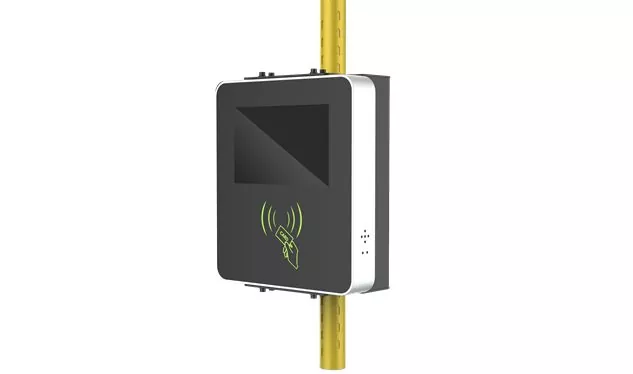
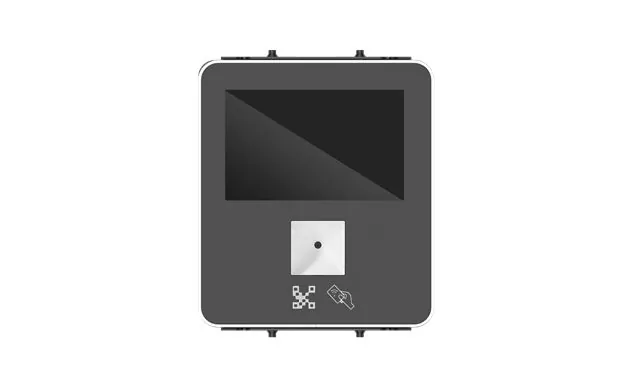
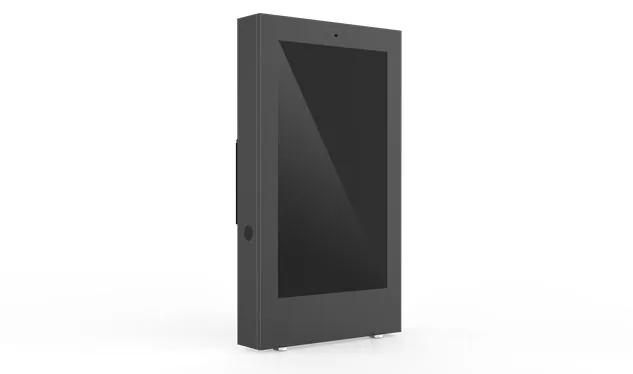
Hotel Self-service Check-in Touch Screen Computer
The following is the rewritten pseudo original version, with core words (PMS, second-generation ID card reader GB/T 35678-2017、 Live detection, binocular camera, fan free, room card sending module, etc.) and all technical parameters are kept intact, and other statements are fully reconstructed:
Send Inquiry
Product Description
The following is the rewritten pseudo original version, with core words (PMS, second-generation ID card reader GB/T 35678-2017、 Live detection, binocular camera, fan free, room card sending module, etc.) and all technical parameters are kept intact, and other statements are fully reconstructed:
The hotel self-service check-in touch screen computer is installed in the hotel lobby, usually embedded in the self-service cabinet for use, and is an integrated interactive device. Its body integrates five parts: touch screen, ID card reader, face recognition camera, room card issuing module and computing host. Its essential role is to enable guests to complete the whole process of check-in, identity verification, payment and settlement, and room card collection by themselves without relying on the front desk manpower.
🏨 Design starting point: both self-service experience and regulatory compliance
The lobby of the hotel is a completely open public area, and the equipment placed here should simultaneously withstand the triple test: passengers who do not know how to operate can also learn from intuition, public security check-in compliance requirements can not be discounted, and 24-hour unattended continuous operation can not fail.
Dual screen collaboration and multi specification screen scheme
At present, the mainstream form is the desktop dual screen structure, which is generally equipped with a dual touch capacitive screen ≥ 11.6 inches: one side of the guest is responsible for the whole process operation, and the other side is for the front desk staff to intervene to assist in the confirmation or room inspection when necessary. If it is deployed on the vertical cabinet in the lobby, the 21.5 to 32 inch vertical screen single screen scheme is often used to match the sight distance and touch accuracy in the standing posture. As for the touch scheme, capacitive 10 point touch is the mainstream of the industry, which not only ensures quick response, but also supports the continuous operation of multiple guests.
Identity verification and card issuance: hardware rather than software
ID reading and face comparison are hardware level modules on the self-service terminal, which cannot be realized by software alone. The body is equipped with a second-generation ID card reader, which can directly read the information in the ID card chip through radio frequency; At the same time, a binocular USB camera module (≥ 2 million pixels) is assembled to collect live face images on site, and 1:1 comparison is completed with chip ID photos. The higher positioning scheme will also install passport readers and Hong Kong, Macao and Taiwan pass readers to cover the self-service check-in needs of overseas guests. The room card issuing module is deeply linked with the verification link: once the person card comparison is passed, the machine will automatically make and issue cards; When checking out, the guest inserts the room card and recovers it, and the room status is updated in real time.
Silent cooling and long-term stability
The equipment in the lobby must run all year round and it is impossible to stop frequently for maintenance. The industrial control all-in-one machine line without fan passive cooling is adopted, and the body is made of all aluminum material+fin type cooling structure, which neither has fan noise nor will the cooling capacity decline due to years of inhalation and ash deposition, just meeting the requirements of the hotel lobby for a quiet atmosphere. The screen should have sufficient brightness redundancy (typical 350 cd/m ²) to calmly cope with the change of illumination in the lobby from morning to night; The touch interface shall also have the ability to resist electromagnetic interference in public space.
Two way connection with PMS and public security system
The self-service terminal must be connected to two data links at the same time: one is the hotel management system (PMS), the other is the hotel security management information system, and requires two-way synchronization. After guests check in, their identity and room information will be automatically reported to the security management system; When checking out, the room card recovery information is pushed back to PMS to refresh the room status. The docking method is generally open API interface, and the highly standardized scheme can minimize the turnkey in the data, PMS、 Public security system and door lock system are synchronized by one key. The payment link must support electronic payment and issue a payment voucher (either in paper or electronic form). The equipment also has its own system recording function to archive the operation process, verification image and payment information for future reference.
🏨 Common landing scenarios
Medium and high-end chain and theme hotel
The main value of self-service terminals in the lobby is to divert peak passenger flow. Refer to the new front desk model promoted by Huazhu Group: guests put their ID cards in the identification area, the machine reads the order and matches the room type in seconds, click on the confirmation to "spit out" the room card, and the whole check-in process takes about 10 to 12 seconds. In the event of such peaks as the arrival of the team in a centralized manner and check-in in the late night and early morning, the self-service terminal can significantly reduce the queue length at the front desk, freeing employees from repetitive registration work and transferring them to provide more warm concierge services.
Reception of overseas guests
The model with passport reader and multilingual interface allows foreign guests to register without looking for the front desk. In the industry scheme, eight language support has been a conventional configuration for international guest hotels. With intuitive UI design, guests with different language backgrounds can smoothly complete the process.
Compact hotel with cramped lobby
Economical hotels or apartment hotels with tight area can be wall mounted or embedded, which can be installed in a space of 0.8 to 1.2 m2. The premise of deployment is to reserve 220V power interface (with ground wire) and wired network not less than 10Mbps; When installing the table, the bottom of the machine body is about 80cm from the ground, giving consideration to the comfort of operation and the stability of the whole machine. The vertical model is reserved for a slightly spacious scene in the lobby. The height of the equipment is generally 140 to 160cm, and it is equipped with anti-collision and anti toppling bases.
Unmanned front desk and smart apartment
In the apartment hotel and the pure unattended mode, the self-service terminal should independently support the full closed loop of check-in and check-out. After the guest completes the verification, payment and card taking at the terminal, the system will immediately send the access control data to the room lock to realize the contactless access from the lobby to the guest room.
📋 Key points of procurement model selection
1. Put compliance ability first
The equipment must be verified with 1:1 witness. The verification result should be reported to the user by voice broadcast. The verification threshold should support user-defined adjustment. The face image quality must meet the relevant technical requirements of GB/T 35678-2017. In addition, the Foreign Affairs Department must confirm whether the equipment can automatically upload the check-in information to the hotel security management information system - this is a hard premise for domestic compliance operation, and there is no room for negotiation.
2. Select screen form according to space conditions
At the point where the lobby is spacious and guests need to operate standing, priority should be given to the 21.5-32 inch vertical vertical screen, and the floor area of the installation point should be calculated in advance (it is recommended that the area should be more than 0.8 m2). If the space is tight or it needs to be incorporated into the existing service desk, the double screen desktop model can be embedded into the desk, or hung on the wall at the column and wall groove. If the embedded route is adopted, the cabinet opening size and heat dissipation allowance must be confirmed at the design stage.
3. Configure peripherals according to the passenger source structure
Hotels with domestic guests as the main guests can be equipped with second-generation ID card readers as standard; If there are overseas tourists, passport readers and Hong Kong, Macao and Taiwan pass readers should be added. It is recommended to select binocular or 3D structured light scheme directly for face recognition camera, which has the ability of live detection and can block forgery attacks such as photos and videos. The room card issuing module shall check whether the card specification (width ≥ 54mm, length ≥ 86mm, thickness 0.2~1.2mm) and communication interface (such as RS232) are compatible with the room card system in use in the hotel.
4. Force calculation platform and interface reservation
One terminal needs to feed multiple loads of touch screen, ID card reader, camera, card issuing module and payment module at the same time. It is recommended to select Intel Core i3 or above x86 platform, with memory ≥ 8GB and solid state disk ≥ 64GB. It will not get stuck when multiple peripherals are concurrent. There are three key types of interfaces: serial ports (connected to ID card readers and card issuers), USB (connected to cameras and code scanners), and network ports (connected to PMS/public security links). The number should be reserved.
5. Remote operation and maintenance and record retention
In the multi store scenario of chain brands, the platform supporting remote centralized control management is preferred. The headquarters can uniformly track the operation status of each store terminal, and uniformly issue software updates and configuration adjustments. The system must automatically retain operation process information, verification images and payment records, and support conditional retrieval and query to meet the needs of both compliance audit and fault backtracking.
Hot Tags: Embedded touch screen computer , Industrial equipment touch screen computer , Medical equipment control touch screen computer , On board terminal touch screen computer , Educational multimedia touch screen computer , Retail cashier touch screen computer , Factory production line MES touch screen computer , Dining room buffet ordering touch screen computer , Hotel self-service check-in touch screen computer , Logistics warehouse management touch screen computer
Related Category
Send Inquiry
Please feel free to give your inquiry in the form below. We will reply you in 24 hours.