


New Retail Touch Screen Monitor
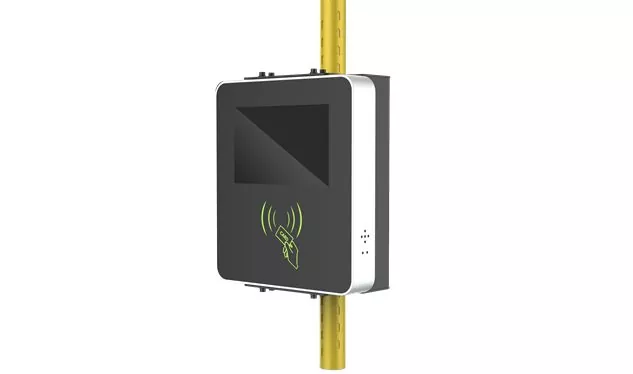
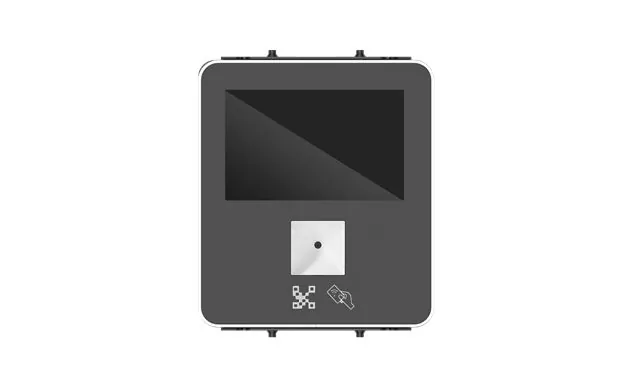
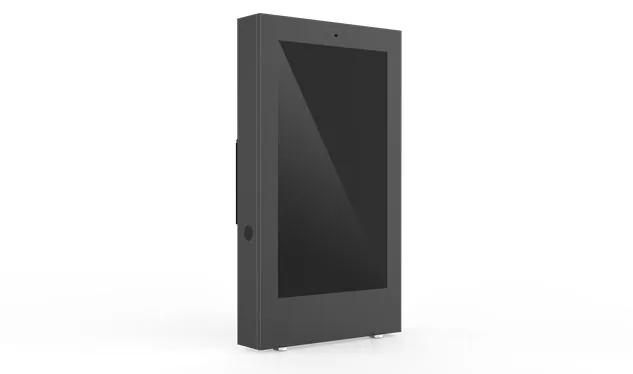
The new retail touch screen monitor is the core interactive terminal connecting online data and offline experience. It has evolved from the traditional secondary screen of POS cashier to the digital infrastructure of stores integrating self-service, interactive marketing, data collection and intelligent operation. It is the key hardware entrance for the retail industry to realize the reconstruction of "people, goods and markets".
Send Inquiry
Product Description
The new retail touch screen monitor is the core interactive terminal connecting online data and offline experience. It has evolved from the traditional secondary screen of POS cashier to the digital infrastructure of stores integrating self-service, interactive marketing, data collection and intelligent operation. It is the key hardware entrance for the retail industry to realize the reconstruction of "people, goods and markets".
🖥️ Core function: from "transaction interface" to "experience entrance"
As a direct window for customers to interact with the store digital system, it bears the following key functions:
Self service and transaction closed-loop: support customers to independently complete operations such as commodity query, self-service ordering, self-service cashier, member registration, and point query. The high-end model integrates the NFC payment function to realize the seamless transaction experience of "pay as you go". In the catering scene, the touch screen monitor can be used as the kitchen display system (KDS) to synchronize orders to the kitchen in real time to reduce communication errors.
Interactive marketing and personalized recommendation: The touch screen equipped with AI capability can push personalized promotional content in real time based on customer behavior. The touch screen of the smart shopping cart can scan the goods and track the consumption amount in real time, and provide real-time and personalized recommendation and promotion in combination with the AI shopping assistant.
Intelligent shopping guide and product positioning: combining electronic tags and optical positioning technology, customers can quickly find the exact location of products in the store through the touch screen. Some stores deploy 4K mobile LCD touch screens as self-service wayfinding terminals when customers cannot find goods.
AI driven customer recognition and accurate touch: digital signage equipped with AI face recognition technology can instantly identify consumer characteristics, dynamically push customized content, effectively attract customers into the store and improve conversion rate.
🛠️ Technical characteristics and key indicators
In order to adapt to the high-frequency use of retail scenes, spatial diversity and environmental complexity, new retail touch screen monitors have special requirements on hardware.
1. Environmental adaptability and protection
Retail scenarios have high requirements for durability and stability of the equipment, which need to cope with daily collisions, liquid splashes and long-term operation.
Protection level: The front panel is usually required to reach IP65 (dust-proof and water spray prevention) level, which can effectively resist accidental liquid splashing and reduce subsequent maintenance costs. High end models for semi outdoor scenes can reach IP66 protection level.
Impact resistance: IK07 or IK08 impact resistance grade is required, and chemically strengthened scratch resistant glass is used to withstand daily collision and scratch in retail environment.
Wide temperature operation: It supports a wide temperature design of -20 ℃ to 60 ℃, and can be deployed in semi outdoor or extreme temperature environments such as charging stations and bus stations.
Screen coating: AG anti glare, AR anti reflection and AF anti fingerprint coating can be selected to effectively reduce light interference, keep the screen clean and reduce daily maintenance workload.
2. Size, resolution and touch
Size selection: the mainstream size covers 10 inches to 55 inches or more. 15.6-22 inches are commonly used for POS cashier and desktop interaction, 21.5-27 inches are suitable for self-service ordering and KDS scenarios, and 32-55 inches of large size touch screens are used for digital signage and interactive display.
Resolution: 1920 × 1080 (FHD) has become the mainstream standard configuration. Some high-end products support 4K UHD resolution to ensure the clear presentation of high-definition commodity pictures and videos.
Touch technology: The projected capacitive (PCAP) touch screen supports 10 points of simultaneous touch, with a surface hardness of 7H, a light transmittance of 85%, and a sensitive and smooth response. The screen needs to support glove operation and glass barrier touch to adapt to special scenes such as catering kitchens.
3. Integration and edge computing
NFC integration: the new generation product directly integrates the safe non-contact transaction technology into the display, realizing the seamless connection between hardware and commercial applications. Customers can complete payment by simply putting their mobile phones or bank cards close to the screen.
Built in AI computing power: A touch all-in-one machine equipped with high-performance processors such as Qualcomm Octa Core or RK3588 has up to 13 TOPS of AI computing power, which can run AI applications such as intelligent recommendation and voice interaction locally, reduce dependence on the cloud, and improve response speed and data privacy protection.
Rich interfaces: USB, HDMI, RJ45 and other interfaces are standard configuration, supporting the connection of scanning guns, printers, cashboxes and other peripherals. Some models support PoE power supply, simplifying wiring.
🏪 Application scenario: differentiated deployment of omni channel retail space
The deployment of new retail touch screen monitors emphasizes scenario adaptation, and different retail formats have different requirements for size, installation mode and function.
Recommended size of application scenario Installation method Key functions
POS cash register 15.6-22 inch desktop bracket/embedded cash register settlement, member recognition, dual screen customer display, NFC payment
Self service ordering/cashier 21.5-27 inch vertical kiosk self-service ordering, multi language voice interaction, and integration of multiple payment methods
Kitchen display (KDS) 22-27 inch wall mounted/cantilever support order real-time synchronization, meal management, oil stain resistance design
Interactive digital signage 32-55 inch wall mounted/floor mounted product display, promotion push, AI face recognition precision marketing
Smart shopping cart 10-15 inch shopping cart integrated scan code pricing, personalized recommendation, electronic tag linkage, real-time budget management
Intelligent shelf/shopping guide 15-21.5-inch shelf embedded goods query, inventory display, electronic tag linkage, wayfinding and navigation
In the catering scene, the touch screen monitor has expanded from a single ordering terminal to a full process solution covering "foreground interaction - back-end ordering - performance management". In retail stores, the smart shopping cart touch screen is becoming a new growth point, upgrading the traditional shopping cart to an intelligent terminal with AI recommendation and real-time budget management.
📈 market prospect
The new retail touch screen monitor market is in a period of rapid growth and is deeply bound to the retail digital process.
Market size: The global retail touch screen display market is expected to grow from US $17.09 billion in 2025 to US $19.06 billion in 2026, with a compound annual growth rate (CAGR) of 11.5%. It is expected to reach US $28.09 billion by 2030, with a CAGR of 10.2%. If the scope is expanded to the broader commercial touch screen monitor market, the scale will be US $6.74 billion in 2025, and is expected to reach US $12.12 billion by 2034, with a CAGR of 6.74%.
Core drivers: the digital promotion of retail industry, the growing popularity of self-service terminals, consumers' demand for better experience, the rise of POS automation technology and the expansion of chain retail enterprises are the main drivers of market growth.
Key trends: integration with AI and IoT solutions, omni channel retail expansion, popularity of interactive digital signage, integration with loyalty plans and mobile payments, and real-time inventory display and analysis are the core trends in the forecast period
Hot Tags: Government affairs touch screen monitor , Educational touch screen monitor , Conference touch screen monitor , Charge Point touch screen monitor , Self service terminal touch screen monitor , POS cash register touch screen monitor , Industrial touch screen monitor , Medical device touch screen monitor , Security touch screen monitor , Smart home touch screen monitor
Related Category
Send Inquiry
Please feel free to give your inquiry in the form below. We will reply you in 24 hours.