Smart Home Control Touch Tablets
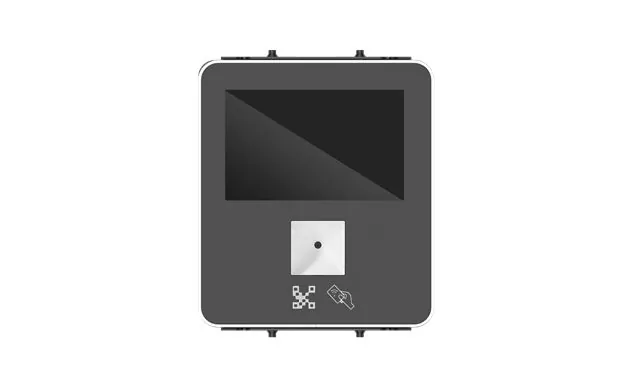
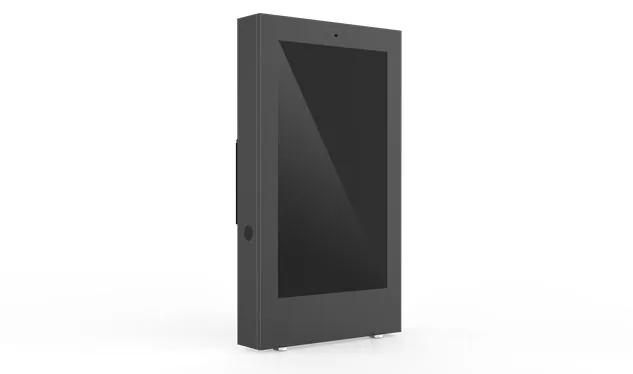
A smart home control touch tablets placed on the wall of a residential building, placed on a desktop, or simply held in hand for movement is essentially an integrated touch terminal that integrates a computing host, touch display screen, multi protocol gateway, and voice interaction module into a compact body. Its role can be summed up in one sentence
Send Inquiry
Product Description
A smart home control touch tablets placed on the wall of a residential building, placed on a desktop, or simply held in hand for movement is essentially an integrated touch terminal that integrates a computing host, touch display screen, multi protocol gateway, and voice interaction module into a compact body. Its role can be summed up in one sentence: it is the control center for unified scheduling of smart devices throughout the house, and also the first entry point for the entire family to interact with the smart ecosystem. Comparing with medical touch tablets, it is easier to see the weight of this specialized terminal - medical touch tablets are responsible for patient data retrieval and diagnosis and treatment decision support in clinical scenarios, while smart home control touch tablets shoulder the three responsibilities of device management, scene scheduling, and information services in home scenarios. One focuses on patient safety and diagnosis and treatment efficiency, while the other focuses on living comfort and convenience.
Change in Form: Complete Genealogy from 4 inches to 15.6 inches
The first thing that surprises people about smart home control touch tablets is their richness in form. From 4 inches to 15.6 inches, the entire size spectrum is filled, and the diversity of installation methods is even better. The type of smart home central control touch tablet that follows the 86 box touchscreen multi protocol gateway route uses a standard 86mm base, which can be replaced in place by removing the traditional switch panel. The body is equipped with a 4-inch high-definition capacitive touch screen, and multiple communication protocols such as Wi Fi, Zigbee 3.0, Z-Wave, etc. are within its coverage range. The Anjubao smart central control screen provides another idea: this smart home central control touch tablet adopts a modular design, with a thickness of only 12mm, and is installed by magnetic suction on the wall. The 7-inch high-definition display screen integrates ZigBee 3.0, Bluetooth 5.0, and RS485 interfaces behind it, and can also drive 4 relays and 8 wired defense zones. It also conveniently connects functions such as visual intercom, elevator reservation, and community service. The Huawei Smart Central Control Screen S2 pushes the boundaries of form even further - it can be used for wall, table, or handheld purposes to switch freely. When hung on the wall, this smart home central control touch tablet will automatically recognize the space and intelligently switch scenes. The Xiaomi Smart Central Control Screen Max has another configuration: a 10.1-inch high-definition large screen, compatible with standard 86 type bottom box, using zero fire power supply, and built-in ultrasonic algorithm. As soon as a person appears within 1 meter, the screen of the smart home central control touch tablet will automatically light up. The fragmentation of the form is not something that each manufacturer plays with. The logic behind it is similar to the flexible switching of medical touch tablets between cart racks, wall racks, and desktop bases - dedicated touch terminals are assembled deep, always focusing on the adaptability of installation scenarios.
Multi protocol access: the basic function of smart home central control touch tablet computer
Beyond form, the first hard bone that smart home control touch tablets need to tackle at the capability level is the unified access of multi protocol devices. The reality that a central control screen has to face is quite complex: lighting, curtains, air conditioning, underfloor heating, fresh air, security sensors, audio and video equipment, with different brands and protocols, but all have to be directed on the same screen. Therefore, multi protocol gateway capability has become the basic configuration of smart home control touch tablets - typical products that support Wi Fi, Zigbee 3.0, Bluetooth 5.0, Z-Wave, and RS485 wired interfaces are not enough. Some high-end models of smart home control touch tablets further integrate Mesh 2.0 gateway, which increases connection speed by 50% compared to the previous generation and also improves networking efficiency by 50%. Seeing this level of capability, the shadow of the medical touch tablet computer has surfaced again: the terminal needs to interface with various medical peripherals such as monitors, barcode scanners, NFC card readers, etc. The two are highly consistent in the underlying requirements of "multi device concurrent access and stable communication", with the only difference on the ecological side - the smart home control touch tablet computer connects to the home device ecosystem, while the medical touch tablet computer connects to the clinical medical device ecosystem.
Voice and AI: The watershed between smart home central control touch tablets and traditional switches
If you ask about the difference between a smart home touchscreen tablet and a traditional switch panel, the answer should be written in terms of voice interaction and AI capabilities. Mainstream products nowadays generally have built-in voice assistants, which are basic for continuous dialogue, multiple rounds of interaction, and executing multiple instructions with one sentence. Xiaomi Smart Home Control Screen Max and other smart home control touch tablets support up to 5 smart home control commands to be issued simultaneously. Multiple rounds of continuous conversations can be interrupted at any time without the need for repeated wake-up. The Xiaoyi Butler, equipped with Huawei's intelligent central control screen MINI, extends the auditory range of the smart home central control touch tablet to a 5-meter far-field pickup. In addition to personification dialogue, multiple dialect recognition, and four tone switching, it can also use AI intelligent analysis to perform fuzzy intention understanding - even if the user says wrong, it can be done correctly, and even the true intention can be questioned through dialogue. The sample that goes deeper is the AI large model whole house intelligent central control screen launched by Bolian Intelligence. This smart home central control touch tablet integrates AI large model technology into the terminal, supporting smart community services and AI chat capabilities. The trajectory of AI sinking all the way to the central control terminal coincides with the direction of integrating AI assisted analysis platform into medical touch tablets to help medical staff quickly interpret data trends - two lines point to the same judgment: dedicated touch terminals are evolving from a simple "operation interface" to an "intelligent decision-making node".
Localized Control: Confidence in Disconnecting Smart Home Control Touchscreen Tablets
Cloud control has rich functions, but the two problems of network dependence and response delay cannot be completely cured. Therefore, localized control has become another important evolution line for smart home control touch tablets in recent years. The approach of Xiaomi's intelligent central control screen Max is to integrate local central capabilities into this smart home central touch tablet, with linkage commands running directly locally and a response speed three times faster than in the cloud. It also supports automatic networking and data synchronization between the main and backup central centers - even if the home network is disconnected, the smart home central touch tablet can still stably control smart devices at home. NEXhome's 15.6-inch EdgePad S smart panel also places its trust locally: this smart home central touch tablet is equipped with powerful local computing and edge decision-making capabilities, emphasizing local offline execution. Even in the event of network fluctuations, the entire smart home system still runs smoothly, ensuring both user privacy and system reliability. This obsession with local reliability is not alone - medical touch tablets must also ensure the availability of clinical data in disconnected or unstable network environments. Two key scenarios lead to the same goal, both recognizing a bottom line: 'It can work without relying on the cloud'.
Scene overflow: Smart home central control touch tablet goes out of the house
Looking at the broad range of industry applications, the landing point of smart home central control touch tablets has already surpassed residential areas. Smart hotels are the most prominent example: after Wanda Hotels signed a cooperation framework agreement with Huawei HarmonyOS Smart Home, guests can easily control lighting, temperature adjustment, curtains and other facilities in their rooms through a smart home control touch tablet computer; The 4-inch intelligent central control screen solution of Future Residence has been implemented and maintained stable operation in about 30000 hotels. With highly integrated hardware equipment and flexible control functions, it provides an efficient solution for the intelligentization of hotel rooms. In office settings, the Crestron TSW-770 and other central touch screens bring the user interface of control technology into homes, conference rooms, classrooms, and command centers. The sound system, projector, display screen, camera, and lighting are all integrated into a centralized control interface, and users can switch between "presentation mode" or "discussion mode" with just one click. This screen is also an extension of the capabilities of smart home central touch tablets. The sample of medical space is more meaningful: in the smart ward created by Fuyi Second Hospital in collaboration with Huawei, the central control screen of the nurse station holds the diagnosis and treatment information of each patient, monitors the situation of each ward in real time, and has a clear view of patients' vital signs, infusion status, and emergency help information. Patients can also control the ward's lighting and smart curtains through voice control. The landscape of cross scenario penetration is already clear - the widespread demand for building intelligence is reusing the technological capabilities of smart home control touch tablets; On the other hand, the experience accumulated by medical touch tablets in identity verification, peripheral integration, and remote operation and maintenance can also provide reference for the central control screen to penetrate into the medical space.
Selection and Deployment: Configuration Logic of Smart Home Control Touchscreen Tablet Computer
When it comes to procurement and deployment, the first hurdle for smart home control touch tablets is installation conditions. New house decoration or old house renovation, 86 embedded smart home central control touch tablets can directly replace traditional switch panels; The wall has been renovated, and the magnetic wall mounted design is more convenient; For scenarios that require flexible mobility, desktop and handheld smart home control touch tablets are the correct solution. The second hurdle is protocol compatibility - the communication protocol used by existing smart devices in the home, the protocol that the smart home control touch tablet must support, and whether the gateway capacity is sufficient also need to be calculated together. The third hurdle is the computing platform, which is classified according to functional requirements: smart home central control touch tablets that only run basic control and scene scheduling can be equipped with quad core ARM Cortex-A35 or Cortex-A7 level processors; For running AI voice, local inference, and multi device concurrent control, it is recommended to choose RK3566 or RK3568 level smart home central control touch tablets. At the operating system level, the Android platform has a rich ecosystem and low threshold for application development, while the Linux platform has high stability and strong security, each with its own strengths. When deploying in multiple rooms or floors, each smart home control touch tablet should also support collaborative wake-up and cross space control. In terms of operation and maintenance, the management experience accumulated by medical touch tablets in batch deployment and remote operation and maintenance - unified device status monitoring, configuration push, and troubleshooting - is precisely suitable for long-term operation and maintenance management of multi terminal smart home systems. Smart home central control touch tablets can be directly referenced.
Market Trend: Smart Home Control Touchscreen Tablets Running on the Growth Channel
Market data also confirms the upward trend of smart home central touch tablets. By 2025, the global market size for smart home control panel tablets is expected to reach approximately 4.8 billion US dollars, and is projected to reach 11.6 billion US dollars by 2034, with a compound annual growth rate of approximately 10.3%. The global shipment volume is expected to exceed 18 million units by 2026. Structurally, wireless product types account for 62.4% of the market share, Android operating system leads with 44.7% revenue share, and residential application scenarios account for 48.2%. The increasing penetration rate of smart homes, the popularization of IoT devices, and the growing demand for energy management are driving this track forward together. On the technical level, there are two trends worth noting: device manufacturers are embedding machine learning algorithms into the central control panel, allowing smart home touch tablets to learn how to predict user behavior, automate daily scenarios, and achieve predictive energy savings; At the same time, hardware level encryption and zero trust security frameworks are becoming standard capabilities for central control screens, further strengthening the security base of smart home central control touch tablets.
Conclusion
Ultimately, the smart home control touch tablet is a home intelligence center that combines voice interaction, local intelligent decision-making, and unified scheduling of all devices in the house on the chassis of commercial touch display and multi protocol gateway technology. It does not only undertake a single interaction task like ordinary tablets, nor does it have medical electrical safety and antibacterial disinfection as the core constraints like medical touch tablets. Smart home central control touch tablets revolve around the comfort, convenience, and multi device collaboration of home scenes, and are the core interaction nodes between residents and the smart ecosystem of the whole house. With the continuous decline of AI big model capabilities and the continuous improvement of local computing platform performance, smart home control touch tablets are growing from a "control panel" to a "home intelligent butler"; The mature experience accumulated in reliability design, multi peripheral integration, and remote operation and maintenance of medical touch tablets will continue to provide useful references for the deep application of smart home control touch tablets in a wider range of building scenarios.
Related Category
Send Inquiry
Please feel free to give your inquiry in the form below. We will reply you in 24 hours.