

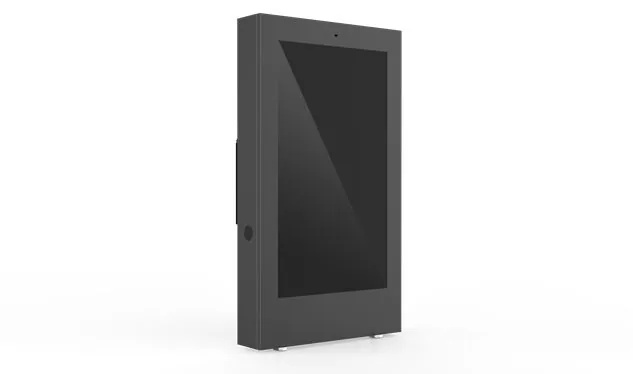
Smart Home Touch Screen Monitor
Smart home touch screen monitor (i.e. smart central control screen) is the core interaction hub of the whole house intelligent system. It has evolved from a simple control panel to a home intelligent hub integrating equipment management and control, scene linkage, voice interaction and AI active service. It is a key hardware entrance to realize "one person, one screen, whole room response".
Send Inquiry
Product Description
Smart home touch screen monitor (i.e. smart central control screen) is the core interaction hub of the whole house intelligent system. It has evolved from a simple control panel to a home intelligent hub integrating equipment management and control, scene linkage, voice interaction and AI active service. It is a key hardware entrance to realize "one person, one screen, whole room response".
🖥️ Core functions: from "control panel" to "home agent"
As the core interface for family members to interact with smart devices throughout the house, it bears the following key functions:
Integrated management of equipment in the whole house: control of integrated lighting, curtains, air conditioning, floor heating, fresh air, audio, security and other subsystems on one screen. High end products can control and display up to 240 KNX devices and control 30 scenes. Some products also have built-in infrared remote controls, which can control traditional infrared home appliances.
Scene linkage and one button execution: The user can preset "home mode", "viewing mode", "sleep mode" and other scenarios, which are triggered by one button on the touch screen. Huawei intelligent central control screen supports "one sentence multiple commands" (up to 5 smart home control commands), and Xiaomi central control screen supports automatic scenarios triggered by voice creation time.
AI voice and deep semantic understanding: the mainstream central control screen has been connected to the large model, supporting multiple rounds of continuous dialogue and deep semantic understanding. The user can send complex instructions (such as "change the color of the master bedroom lamp") in natural language, and the system can infer the corresponding control action. Some products also support the recognition of Cantonese, Shanghainese and other dialects.
Visual intercom and security linkage: the central control screen integrates the SIP visual intercom function, which can be linked with the intelligent doorbell and door machine. When a visitor presses the doorbell, any central control screen in the home will pop up a visitor screen in real time, instantly incarnating into a video intercom window.
Energy management and data board: some central control screens can display the energy consumption data, air quality, temperature and humidity and other information of the whole house in real time to help users manage energy and adjust comfort.
🛠️ Technical characteristics and key indicators
Smart home touch screen monitors need to take into account home aesthetics, multi protocol compatibility and long-term stable operation in terms of hardware and software.
1. Size, form and installation mode
Size selection: the mainstream size covers 3.5 inches to 15.6 inches. 4-inch products are mostly used for replacing 86 boxes of standard switch positions. 6.9-7-inch is the common size of bedroom, corridor and other spaces, and 10-15.6-inch is suitable for living room, kitchen island and other scenes that need more interaction space.
Flexible and diverse installation methods:
86 bottom box installation into the wall: the vast majority of small and medium-sized central control screens are installed with 86 standard bottom boxes, which can directly replace the traditional switch panel and keep the wall uniform and beautiful. Some products are designed with double 86 panels, which can be connected with standard switches only by occupying one wall 86 bottom box.
Wall and table can be held: some products support dual modes of wall hanging and desktop. Huawei's intelligent central control screen S2 supports the ability to hold a wall or a desk, and the desk Dock supports ± 175 ° rotation. It can be taken off the wall and used as a mobile control terminal.
Tea table form and mobile tablet: In some system solutions, the control center can present tea table form (equipped with a 24 inch touch screen), or flexibly deploy in the form of a mobile 17 inch touch tablet.
2. Touch technology and protection
Touch technology: Projective capacitive (PCAP) touch screen is the absolute mainstream, with surface hardness of 6H and light transmittance of 85%.
Waterproof and glove touch: For kitchen, balcony and other scenes, the central control screen should have waterproof and anti-interference design to effectively suppress the false touch caused by water drops, and support the glove operation with a thickness of 3mm.
Environmental adaptability: the working temperature range usually covers -20 ℃ to 60 ℃, and the ESD protection voltage (contact) reaches 8kV, which can meet the use needs of most home environments.
3. Multi protocol integration and interconnection
The central control screen, as a "gateway" device of the whole house intelligence, needs to support a variety of wireless communication protocols:
Zigbee 3.0: mainstream protocol for connecting low power consumption devices such as lights, sensors and curtain motors.
Wi Fi 6: used to connect cameras, smart appliances and other devices that need high bandwidth.
Bluetooth LE: used for device distribution network and near-field control.
Matter: As a unified application layer standard, it is rapidly popularized. By the end of 2025, the penetration rate of the Matter protocol in the central control screen has reached 35%. The central control screen supporting Matter can be used as a bridge to connect Zigbee devices to Apple Home, Google Home, Alexa and other ecosystems.
KNX: For high-end residential and building automation, some central control screens natively support KNX bus control.
4. Power supply and interface
Power supply mode: PoE (Ethernet power supply) and neutral line power supply are supported. The PoE scheme simplifies the wiring, and the zero live line scheme can directly use the original switch circuit.
Interface configuration: usually equipped with dual network ports (one for internal network control and one for external network or visual intercom), as well as USB, RS485 and other expansion interfaces.
market prospect
The smart central control screen market is in a period of rapid growth, which is one of the fastest growing categories in the smart home field.
Market size: In 2025, the global market size of intelligent central control screen will reach 1.85 billion US dollars, with a year-on-year growth of 14.2%. Among them, the shipment volume of the Chinese market has exceeded 32 million units, accounting for more than 45% of the global total shipment volume, and has become the world's largest single consumer market and production and manufacturing base. It is estimated that the global market will reach 2.12 billion US dollars in 2026, and the Chinese market is expected to reach 980 million US dollars, with a year-on-year growth of 15.2%.
Upgrade of product structure: the market share of high-end central control screen with voice recognition, scene linkage, security monitoring and energy management functions will increase to 38% in 2025, an increase of 12 percentage points over 2023, and is expected to expand to 42% in 2026, becoming the main engine to promote the growth of industry value.
Competition pattern: The industry concentration has gradually increased. The total market share of the top five manufacturers in 2025 will be about 65%. It is expected that CR5 will increase to 70% in 2026, and the market competition will shift from single product price war to ecosystem war.
Technical trend: multi-mode interaction and localized computing power become key breakthrough points. In 2025, the proportion of central control screen products supporting offline voice wake-up and edge computing processing will increase to 25%. The intelligent central control screen equipped with NPU chip is becoming the standard configuration. The application of local AI big model will enable the device to have stronger intention understanding and active service capabilities.
Hot Tags: Government affairs touch screen monitor , Educational touch screen monitor , Conference touch screen monitor , Charge Point touch screen monitor , Self service terminal touch screen monitor , POS cash register touch screen monitor , Industrial touch screen monitor , Medical device touch screen monitor , Security touch screen monitor , Smart home touch screen monitor
Related Category
Send Inquiry
Please feel free to give your inquiry in the form below. We will reply you in 24 hours.